Astravija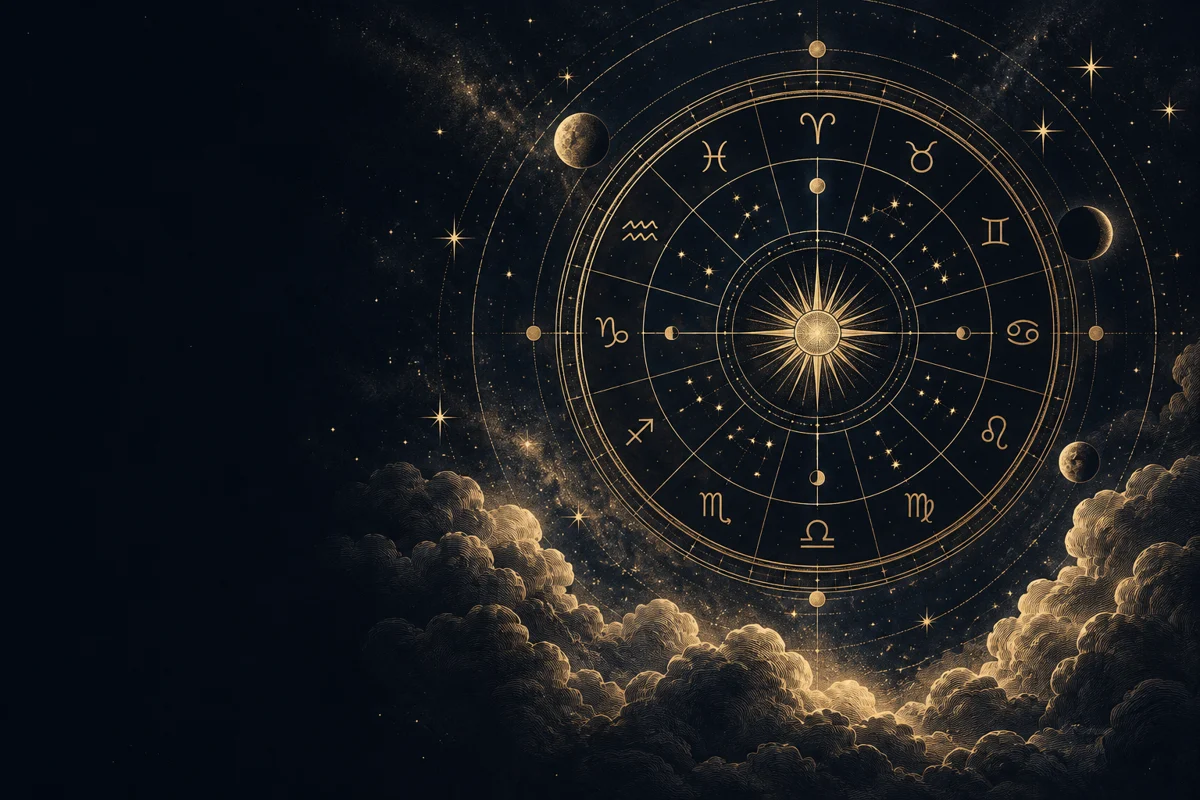
What is a birth chart?
A birth chart, also called a natal chart, is a diagram of celestial positions at a particular birth time and place. It marks the Sun, Moon, planets and axes used in astrology. It includes much more than the single zodiac sign you usually give when asked when you were born.
Astrological interpretation gives this diagram symbolic meaning. Calculating a planet’s position and interpreting its meaning for a person’s life are different things: a precise calculation does not itself validate the interpretation.
Sun
Self-expression and direction
Moon
Inner rhythm
Ascendant
Relating to your surroundings
Which details do you need?
Have your birth date, local birth time and city ready. Time matters for the Ascendant and houses, while the place connects the sky to the local horizon. Enter the time recorded in your birth documents; do not convert it to UTC yourself.
Historical time zones and daylight saving time depend on the specific date and place. A rule such as “Lithuania is UTC+2” is not enough. To refine your details, start by checking your documents or maternity hospital records.
How to read it: the first three steps
Start with your Sun sign, associated in astrology with self-expression and direction. Then read about your Moon sign, traditionally linked to emotional needs. The third step is the Ascendant, which describes your relationship with your surroundings and your initial reactions in astrology.
Do not rush to turn everything into a single personality description. Note which ideas reflect your experience and which do not fit. You can use the chart as a set of questions rather than a list of rules.
Planets, signs, houses and aspects
It helps to separate four layers. In astrological language, a planet describes a theme; a sign, its expression; a house, an area of life; and an aspect, the angular relationship between two positions. Reading all layers at once can be confusing, so start with one planet.
For example, before reading about Venus in a house, learn which themes astrologers associate with Venus. Then compare the sign and house descriptions. Different house systems can produce different boundaries, so check the settings when comparing calculators.
What if you do not know your birth time?
Do not enter a random time as if it were accurate. Without a reliable time, the Ascendant and houses cannot be determined reliably. Even the Moon sign may change that day: keep both possibilities open until the time is known.
The Sun sign can often be found from the date, but the exact moment also matters on days when it changes signs. A good result clearly shows what is known and what remains uncertain.
More on these concepts: Astrodienst: birth chart basics.