Astravija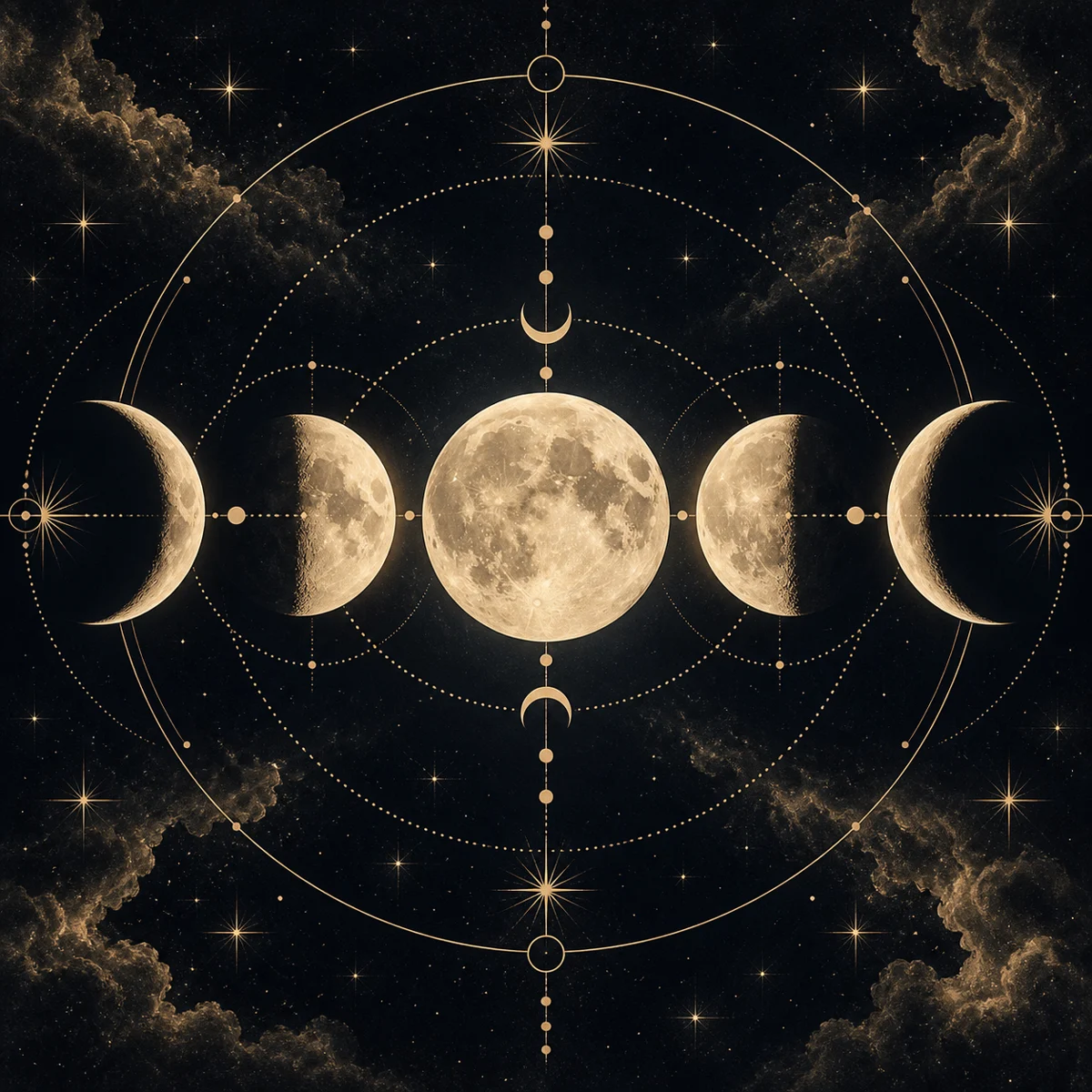
Why does the Moon’s appearance change?
The Moon does not produce its own light: we see reflected sunlight. As it orbits Earth, we see different portions of its illuminated side. These changes are called lunar phases. A complete cycle takes about 29.5 days.
The normal phase cycle is not Earth’s shadow falling on the Moon. Earth’s shadow is involved in a lunar eclipse, which is a different phenomenon.
The four main phases
At New Moon, the Moon lies close to the Sun’s direction in the sky, so we see almost none of its illuminated side. The visible lit portion then grows. At First Quarter, roughly half the disk appears illuminated from Earth.
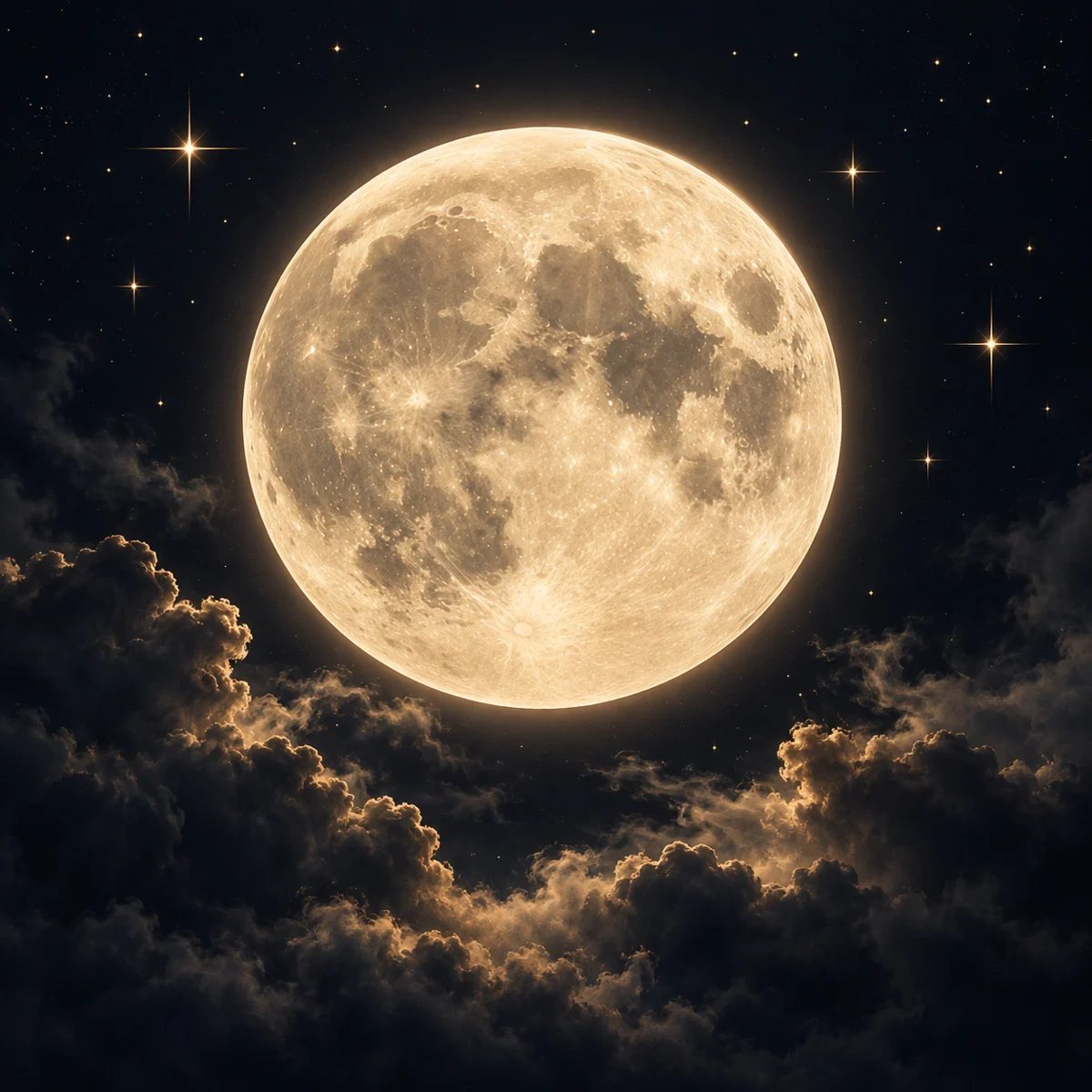
At Full Moon, we see almost the entire illuminated disk. The visible lit portion then shrinks: the Moon wanes, passes Last Quarter and returns to New Moon. There are no abrupt visual boundaries between the main phases; the appearance changes continuously.
How to read a lunar calendar
Check which time zone is used. A phase occurs at the same moment for the whole Earth, but the local date and time can differ. A calendar in UTC may show a different date from one using Lithuanian time.
The illumination percentage describes the visible lit portion of the Moon’s disk. The percentage alone does not tell you whether the Moon is waxing or waning: you also need the cycle direction or phase name.
Astronomy and symbolic rituals
An astronomical phase calculation describes a celestial phenomenon. Connecting journaling or intentions with the phases is a chosen self-observation practice. One does not prove the other.
If you enjoy a monthly rhythm, you might write down what you want to focus on at New Moon and reflect later on how it went. You do not need to believe a particular phase guarantees results. The regular pause itself matters most.
Does this page show today’s phase?
This page explains the phases; it is not a calendar updated daily. We do not present a fixed image as the Moon’s current position.
To find a phase for a particular day, choose an astronomical calendar that clearly states its date and time zone. If you are interested in the Moon’s zodiac position at birth, read the separate Moon sign guide.
More on these concepts: NASA: Moon phases.